How UAE Fuel Prices Are Set Each Month, and What They Mean for You
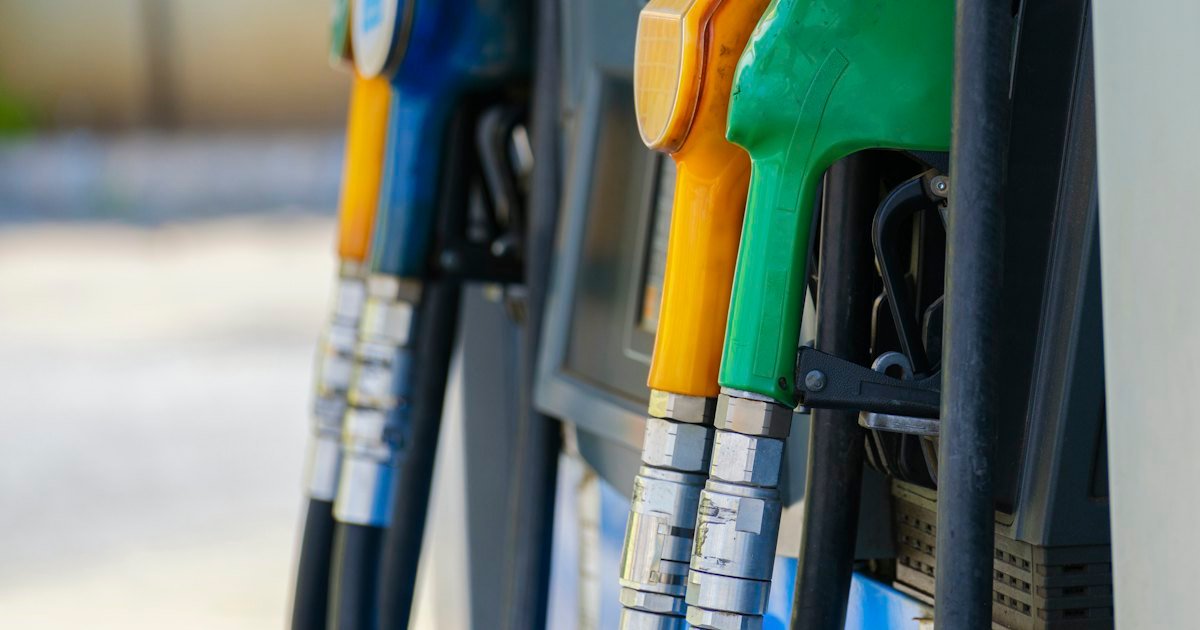
Towards the end of every month, drivers across the UAE wait for the next month’s fuel prices. A change of a few fils per litre sounds small, but it adds up for a family running two cars or a small business with delivery vans.
This guide explains how prices have been set since the 2015 reform, what Super 98, Special 95 and E-Plus 91 actually mean, and how to work out what any change will cost you.
What changed in August 2015
Before 2015, petrol and diesel prices in the UAE were fixed for long periods and subsidised by the state. In July 2015 the government announced that prices would be deregulated and linked to global prices from 1 August that year.
Since then, the UAE Fuel Price Committee has reviewed and announced prices every month. The aims set out at the time included encouraging more careful fuel use and preserving natural resources, while letting the local price reflect what fuel is worth on world markets rather than a fixed, subsidised level.
How the monthly price is set
At the end of each month the committee sets the next month’s price for each grade in line with global prices, and stations apply it from the first day of the new month. The price then stays fixed for the whole month, whatever oil does in the meantime, so a new month’s price reflects what happened in the market before it, not after.
Pump prices do not follow crude oil alone. Petrol and diesel are refined products with their own international prices, which usually track crude but not exactly, and the retail price also has to cover transport, distribution and operating costs.
Why prices don’t fall the moment oil does
Because the price is set once a month, a mid-month drop in oil only shows up, if it lasts, in the next announcement. Brent crude is at 98.32 US dollars a barrel right now, but a single day’s figure does not decide next month’s pump price. You can follow the trend on our live oil prices page.
Drivers saw this clearly in 2022, when UAE pump prices rose sharply as global oil surged, then eased over the following months.
Super 98, Special 95, E-Plus 91 and diesel
The number is the fuel’s octane rating: its resistance to “knocking”, when fuel ignites too early inside the engine. A higher number does not mean more energy per litre; it means the fuel suits engines designed for it.
| Grade | What it is | Typically suits |
|---|---|---|
| Super 98 | Highest octane and highest price | High-performance or high-compression engines whose maker specifies it |
| Special 95 | Mid-range octane | Many modern cars whose manual lists 95 as the minimum |
| E-Plus 91 | Lowest octane and lowest petrol price | Cars whose manufacturer approves 91 |
| Diesel | Fuel for diesel engines, priced separately | Trucks, buses, equipment and some passenger vehicles |
The rule of thumb is to use at least the grade your owner’s manual or fuel-flap label recommends. A higher grade than the engine needs rarely brings a noticeable benefit, while a lower one than recommended can affect performance.
Diesel matters even if you drive a petrol car. It powers trucks, buses and much of the commercial fleet, so changes in its price can feed into the cost of moving goods and deliveries.
Worked example: what a price change does to your budget
Say you drive about 2,000 km a month in a car that uses 10 litres per 100 km, or 200 litres a month. Suppose your grade costs AED 2.80 a litre one month and AED 3.00 the next. These are illustrative numbers, not actual prices.
| Monthly use | Cost at AED 2.80 a litre | Cost at AED 3.00 a litre | Extra per month |
|---|---|---|---|
| 100 litres | AED 280 | AED 300 | AED 20 |
| 200 litres | AED 560 | AED 600 | AED 40 |
| 300 litres | AED 840 | AED 900 | AED 60 |
The formula is monthly cost = (distance ÷ 100) × litres per 100 km × price per litre. In this example, a 20-fils rise per litre (100 fils make one dirham) adds about AED 40 a month, or AED 480 over a year if it lasts.
The same maths applies to grades. If your car runs happily on Special 95 but you fill up with Super 98, a hypothetical gap of 10 fils a litre costs you AED 20 a month on 200 litres, which is AED 240 a year.
Practical ways to manage fuel costs
- Check the announcement at the end of the month. If prices are going up, filling the tank before the 1st saves a little: about AED 12 on a 60-litre tank for a 20-fils rise.
- Track your fuel in litres, not just dirhams, so you can tell whether a bigger bill comes from the price or from driving more.
- Keep tyres at the recommended pressure, and avoid leaving the engine running for long just to keep the air conditioning on while you wait.
- Smooth driving, without hard acceleration and braking, cuts consumption, especially in city traffic.
- Budget a small fuel buffer rather than a fixed figure, since the price can change every month.
This is general information to help you plan, not financial advice.
Where to find the official prices
Approved prices are published through official channels and by the national fuel distribution companies. We list the latest Super 98, Special 95, E-Plus 91 and diesel prices on our UAE gold price page, next to gold and currency rates, and update them after each monthly announcement.
How other Gulf countries handle fuel prices
Most Gulf states have reformed fuel pricing over the past decade, but their systems differ. Some review prices monthly, others at longer intervals, and some have used caps at times to limit increases. Prices in parts of the region remain among the lowest in the world.
Because these policies change from time to time, check the official announcements from each country’s energy ministry or national fuel company. For the bigger picture, read our guide to oil prices and Gulf economies.
Frequently asked questions
When are new UAE fuel prices announced?
Usually in the last few days of each month. They take effect on the first day of the following month and stay fixed until the next announcement.
Why didn’t petrol get cheaper when oil fell?
Because the pump price is fixed for the month. A fall in oil shows up in the next announcement if it lasts, and refined petrol prices do not always move by the same percentage as crude.
Will Super 98 make any car perform better?
Not necessarily. Many engines are designed to run efficiently on 95 or 91, and the higher grade mainly benefits engines that require it. Check your owner’s manual or ask the dealer.
Knowing when prices are announced and how to run the numbers turns the monthly change from a surprise into a line item you can plan for.