Buying Gold in Saudi Arabia: Prices, VAT and Invoices Explained
In Saudi Arabia, gold is far more than decoration. It features in wedding gifts and family occasions, and many households still treat it as a way to save. Whether you have just moved to the Kingdom or are shopping for a special occasion, it pays to understand how a price is put together before you walk into a shop.
This guide explains why 21K dominates the market, how prices are quoted in riyals, when the 15% VAT applies and when it does not, what the hallmark and invoice should show, and how to compare shops in the big cities.
Why 21K rules the Saudi market
21K gold is 87.5% pure. That is high enough to hold its value well, while the remaining 12.5% of alloy metals makes bangles, chains and rings tough enough for everyday wear. The combination has made 21K the standard for traditional jewellery and occasion gifts.
It is also easy to sell or exchange later, because every shop handles it daily and can value it quickly. 18K is common in diamond and gem-set jewellery and in lighter modern designs, 24K is bought mostly as bars and coins for saving, and 22K is sold too, though less widely.
How prices are quoted in riyals
The Saudi riyal (SAR) is pegged to the US dollar at 3.75, so the riyal gold price moves in step with the global dollar price per ounce. The 21K gram price is simply the riyal price of a gram of pure gold multiplied by 0.875.
For example, our live estimate for 21K is 429.58 riyals per gram right now. That is the raw gold price, before making charges and VAT. You can see every karat and weight on our gold price in Saudi Arabia page, and on city pages such as gold price today in Riyadh and gold price today in Jeddah.
Shops usually show the day’s gram rate for each karat on a board or screen and update it as the market moves. If you spend a long time going from shop to shop, the rate may shift slightly, so confirm the rate that applies when you pay.
15% VAT: what it is charged on
Saudi VAT has been 15% since July 2020. It applies to gold jewellery sold by a VAT-registered business, and it is charged on the full taxable amount, meaning the gold value plus the making charge and any other additions, not on the making charge alone.
Here is an example with hypothetical figures: a 30 g 21K set, a gram rate of 330 SAR and a making charge of 25 SAR per gram.
- Gold value: 30 × 330 = 9,900 SAR.
- Making charge: 30 × 25 = 750 SAR.
- Subtotal before VAT: 10,650 SAR.
- VAT at 15%: 1,597.50 SAR.
- Total: 12,247.50 SAR.
In this example the VAT is more than double the making charge, so always include it when comparing quotes, and ask whether a price tag already includes VAT.
Investment gold: when the rate is zero
At the time of writing (2026), Saudi Arabia zero-rates supplies of gold that is at least 99% pure and tradable on global bullion markets, such as recognised investment bars and coins. Gold below 99% purity, including 21K and 18K jewellery, is taxed at the standard rate.
Purity alone is not always enough, because the item must meet the investment-gold conditions, so do not assume every 24K piece is automatically zero-rated. Make sure the invoice states the bar’s purity and weight, and check the official rules published by the Zakat, Tax and Customs Authority (ZATCA).
Check the hallmark and the invoice
Saudi rules require gold items to be stamped with their karat, using one of the officially recognised karats, and to carry the maker’s or importer’s mark. Look for the stamp before you buy, such as 875 for 21K or 750 for 18K, and ask to see the piece weighed.
According to Ministry of Commerce guidance at the time of writing, a gold sales invoice should include:
- The shop’s name, address and commercial registration number, plus its VAT number if it is registered.
- The date of sale and the buyer’s details.
- The type of item, its karat, weight and price.
- A statement that the item is used, if it is second-hand.
- The gold weight shown separately if stones or other non-precious materials make up more than 5% of the item’s weight.
VAT-registered businesses issue their invoices electronically, and the simplified invoice you receive as a shopper normally carries a QR code. Keep it: you will need it to sell, exchange or make a complaint, and you can report problems to the Ministry of Commerce through its official channels. Our guide on how to read a gold invoice explains each line.
Comparing shops in the big cities
The raw gold price is practically identical in Riyadh, Jeddah, Dammam, Mecca and Medina, because it follows the global price and a riyal fixed to the dollar. What differs between shops is the making charge, the design and the dealer’s margin.
- Decide on the karat and rough weight before you start.
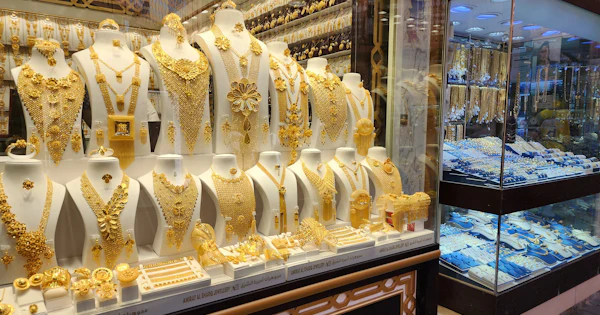
- Visit at least two or three shops, in the traditional gold markets of the older districts as well as in malls.
- Ask each for a written quote that separates the gram rate, the making charge and the VAT.
- Work out the all-in cost per gram (the subtotal before VAT divided by the weight) and compare.
- Ask about exchange and buy-back policies, which vary widely between shops.
Around Eid and during the wedding season shops get busy and staff have less time, so going early in the day gives you room to compare calmly.
Frequently asked questions
Is gold cheaper in Jeddah than in Riyadh?
The raw gold price is essentially the same across the Kingdom. Final prices differ because of making charges and shop margins, so two similar pieces can cost different amounts in shops on the same street.
Is the 15% VAT charged only on the making charge?
No. When the seller is VAT-registered, it is charged on the whole taxable amount: the gold value and the making charge together.
Are 24K bars free of VAT?
They are zero-rated if they are at least 99% pure and tradable on global bullion markets, under the rules in force at the time of writing. Check that the invoice states the purity, and confirm with ZATCA if in doubt.
Knowing the gram rate before you go and reading the invoice before you pay will spare you most surprises. This is general information, not financial or tax advice.